Why Showing the Cracks in Your Creative Process Is Actually Your Biggest Selling Point
Scroll through any handmade marketplace or creative Instagram account and you'll find a whole lot of perfection. Flawless flat lays. Glowing testimonials. Finished products that look like they materialized out of thin air, fully formed and flaw-free.
Here's the thing, though: most people don't actually believe that anymore.
Customers who shop from independent creators aren't just buying a product — they're buying into a person. And people are complicated, inconsistent, and occasionally a total mess. The makers who are willing to own that? They're the ones building communities that stick around for years, not just long enough to complete a transaction.
The Psychology Behind Why Imperfection Works
There's solid research backing up what a lot of successful creators have figured out by instinct. When someone shares a struggle — a kiln that cracked a whole batch of ceramics, a dye lot that went completely sideways, a product launch that landed with a thud — it triggers something called parasocial connection. Basically, the audience starts to feel like they actually know you.
And when people feel like they know you, they trust you. When they trust you, they buy from you. They also defend you in comment sections, recommend you to friends, and come back even when a cheaper option exists.
Psychologists call this the "pratfall effect" — the idea that a competent person who occasionally shows vulnerability actually becomes more likable, not less. For independent makers, this is huge. You're already up against mass-produced alternatives with bigger budgets and faster shipping. Your humanity is a competitive advantage that no algorithm or supply chain can replicate.
What the 'Messy Middle' Actually Looks Like
The messy middle isn't about oversharing or performing struggle for sympathy. It's the honest, in-between space where real creative work happens — before the triumphant finished photo, but after the initial spark of inspiration.
It might look like:
- A video of you restarting a knitting pattern for the fourth time because the tension still isn't right
- A candid caption about how a new product idea completely flopped at your last market
- A behind-the-scenes reel showing the cluttered corner of your studio that never makes it into the aesthetic shots
- An honest post about the week you almost gave up on your shop entirely
One candle maker based in Portland shared a story about a batch of holiday candles that scent-threw so poorly she almost scrapped the whole fragrance line. Instead of quietly moving on, she posted about it — the failed test burns, the wasted wax, the frustration. That single post got more saves and comments than anything she'd shared in months. More importantly, it led to a flood of customers who said they trusted her more because she was willing to talk about it.
That's not a fluke. That's the messy middle doing exactly what it's supposed to do.
Finding the Line Between Real and Reckless
Okay, so vulnerability is powerful — but that doesn't mean you should post every bad day or turn your shop's social media into a personal journal. There's a real difference between strategic transparency and chaos, and staying on the right side of that line matters.
Here are a few principles to keep in mind:
Share the process, not just the pain. The most effective messy-middle content isn't just "this was hard" — it's "this was hard, and here's what I learned" or "here's how I'm figuring it out." Forward motion matters. It shows customers that you're resilient, not fragile.
Keep it relevant to your craft. A story about a failed glaze technique? On brand. A rant about a family argument? Not the place. Your audience is invested in your creative world — keep the vulnerability connected to that world.
You don't owe anyone everything. Transparency doesn't mean total disclosure. You can be honest about creative struggles without sharing your financial stress, health issues, or personal relationships. Decide in advance what's in bounds and what's not, and stick to it.
Time your honesty thoughtfully. Sharing a failure in real time can feel raw and reactive. Sometimes it's more powerful — and more professional — to share it after you've worked through it. That way you're giving your audience a complete arc, not just a moment of distress.
How to Actually Start Sharing More Honestly
If you're used to only posting the polished stuff, shifting toward more authentic content can feel awkward at first. Start small.
Try a weekly or monthly "what I'm working through" post — just a paragraph or two about a current creative challenge. See how your audience responds. Chances are, they'll respond warmly.
You can also look back at past struggles you've already resolved and share those as retrospective stories. There's less risk involved since you already know how it turned out, and it still gives your audience that valuable window into your real process.
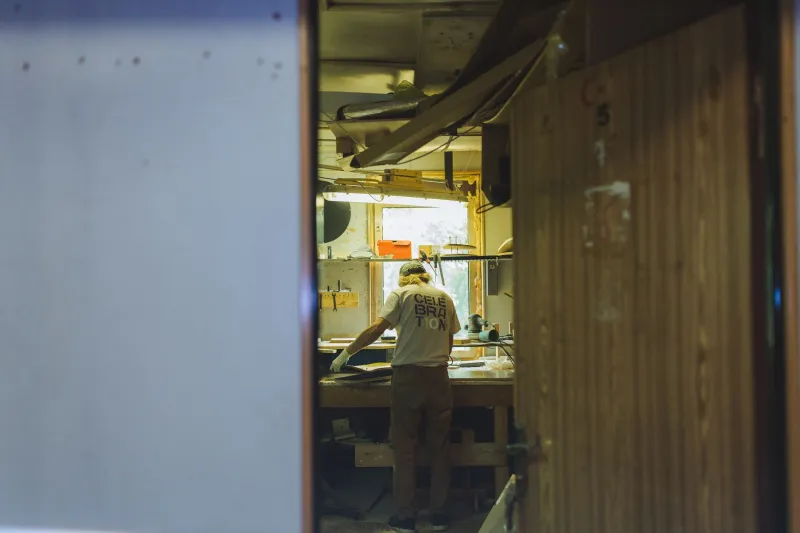
Another approach: show the workspace, not just the work. A messy studio shot, a pile of rejected prototypes, a sketchbook full of crossed-out ideas — these images communicate effort and authenticity without requiring you to say a single vulnerable word.
Why This Matters More Than Ever Right Now
The handmade and independent creator space is more crowded than it's ever been. Customers have endless options, and attention is genuinely hard to hold. Standing out on the basis of product quality alone is increasingly difficult when there's always someone with a similar aesthetic and a lower price point.
What can't be easily replicated is you — your specific story, your particular creative journey, your willingness to show up honestly in a space that's usually full of highlight reels.
The makers who are thriving right now aren't necessarily the ones with the most followers or the most polished feeds. They're the ones who've made their customers feel something real. Who've built a community instead of just a customer list.
Your messy middle isn't a liability. It's the thing that makes someone choose your shop over every other option in their browser tab.
So go ahead — share the crack in the glaze, the seam that didn't quite line up, the batch you had to redo three times. Your people will love you more for it, not less.