Your Story Is Worth More Than You Think: How Sharing the Real You Unlocks Higher Prices
There's a candle on Etsy that sells for $8. Then there's another one — same size, similar scent — that sells for $38. The difference isn't the wax. It's not even the packaging. It's the paragraph below the listing that tells you the maker started pouring candles in her garage after losing her job, how she spent six months getting the scent ratios just right, and why every single one is named after a memory from her childhood in rural Tennessee.
That story? It's doing serious financial work.
This isn't a fluffy concept. There's real psychology — and real money — behind why customers willingly pay a premium for handmade goods from creators they feel like they know. If you're an independent maker who's been hesitant to put yourself out there, this article is your nudge to reconsider.
Why the Brain Pays More for Meaning
Humans are wired for narrative. Long before we had spreadsheets or product reviews, we made decisions based on stories. Researchers in consumer psychology have consistently found that when a product is accompanied by a personal story, buyers assign it greater value — sometimes dramatically so.
In one well-known study, objects that came with a story attached sold for significantly more than identical objects without one. The items themselves hadn't changed. The perceived worth had.
For independent creators, this is genuinely good news. You already have a story. You don't need to manufacture one. The challenge is learning to share it in a way that feels natural rather than performative.
The Transparency Factor
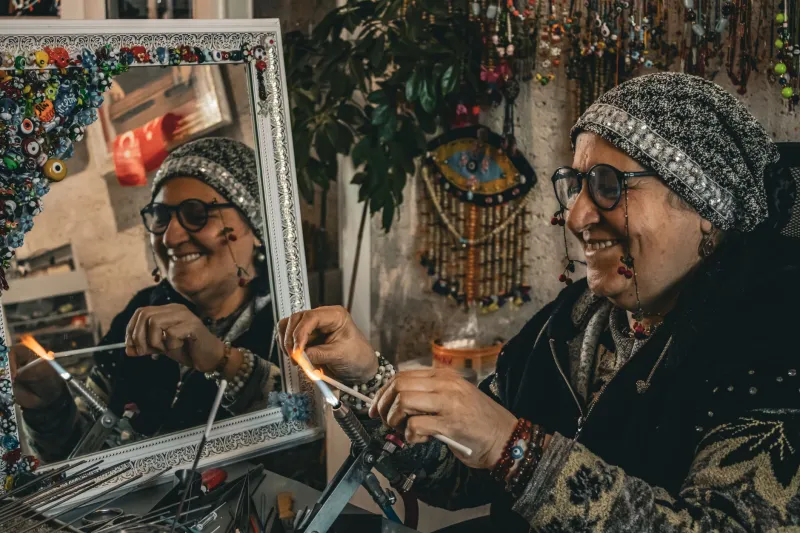
Customers who shop from independent makers aren't just buying a thing — they're buying into a worldview. They want to know where their money goes. They want to feel like their purchase matters beyond the transaction.
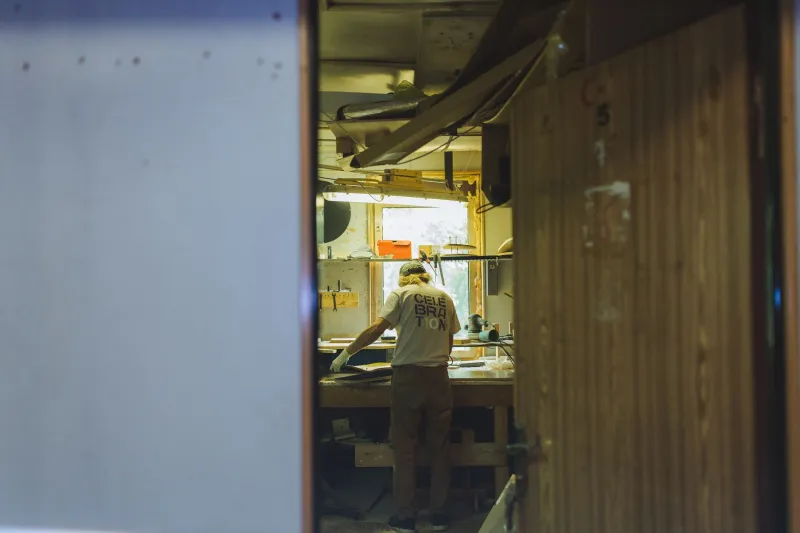
When you show your process — the sketch that didn't work, the glaze that cracked, the version three of the design before you landed on version four — you're not showing weakness. You're showing craft. You're proving that what they're getting isn't stamped out of a mold in a factory somewhere overseas. It took you, specifically, to make it.
This kind of transparency builds what marketers call perceived authenticity, and it's one of the few things mass-produced goods genuinely cannot replicate. A big-box candle brand can't tell you about the Tuesday afternoon when the maker cried in her garage and almost quit. You can. And that distinction is worth real dollars.
What "Origin Story" Actually Means for Makers
You don't need a dramatic backstory to make this work. You don't need to have overcome a major life crisis or built your studio from salvaged wood. Your origin story is simply the honest answer to: Why do you make what you make?
Maybe you started screen-printing because you couldn't find shirts with designs that reflected your neighborhood's culture. Maybe you began making jewelry after your grandmother passed and left you her bead collection. Maybe you just fell down a YouTube rabbit hole about resin art during a pandemic winter and never looked back.
All of those are real. All of those are compelling. None of them require embellishment.
The key is specificity. Vague stories don't move people. "I've always loved art" is forgettable. "I started drawing on grocery bags when I was nine because we couldn't afford sketchbooks" is not.
Putting a Number on Narrative
So how much does story actually add to your bottom line? It's hard to pin down an exact figure — it varies by product category, audience, and how well the story is told. But here's what independent creators consistently report:
- Higher conversion rates on listings that include personal context versus those that don't
- Lower price resistance when customers feel emotionally connected to the maker
- Stronger repeat purchase behavior — people come back to creators they feel loyal to
- More organic word-of-mouth because customers share the story, not just the product
One ceramic artist who sells through her own website and a handful of craft fairs noted that after she started including handwritten notes about the inspiration behind each piece, her average order value climbed noticeably — and her return customer rate nearly doubled over a single year.
Another illustrator who sells prints online found that her best-selling design wasn't her most technically impressive piece. It was one she almost didn't post because she made it during a hard stretch and thought it was "too personal." That vulnerability was exactly what connected.
Where to Actually Share Your Story
Knowing your story matters is one thing. Knowing where to put it is another. Here are the spots that tend to do the most work:
Your About Page — This is the obvious one, but most makers undersell it. Write it like you're talking to a friend, not filing a bio for a corporate website. Include the messy parts.
Product Descriptions — Don't just describe what the item is. Tell us something about why this particular piece exists. Even a sentence or two of context changes the feel entirely.
Social Media Captions — Behind-the-scenes content consistently outperforms polished product shots in terms of engagement. Show the process. Talk about the decisions you made.
Packaging Inserts — A small card with a personal note or a brief story about the piece can turn a one-time buyer into a long-term fan. It's a low-cost touchpoint with disproportionate impact.
Email Newsletters — If you have a list, use it to go deeper than you can on social. Share the story behind a new collection before it launches. Let subscribers feel like insiders.
A Word on Keeping It Real
One thing worth saying plainly: this only works if it's genuine. Customers — especially the ones who seek out independent makers specifically — have a finely tuned radar for inauthenticity. If your story feels manufactured or your "struggles" read like a marketing script, it will backfire.
The good news is that you don't have to share everything. You get to decide what parts of your story feel right to put out there. Authenticity isn't about radical oversharing. It's about choosing true things and saying them honestly.
You also don't have to tell the whole story at once. Your narrative can unfold over time — through posts, through conversations at markets, through the evolution of your work itself. Let people in gradually, and they'll keep coming back to see what happens next.
The Bottom Line
Mass production will always be able to undercut you on price. That's not a battle worth fighting. What mass production will never be able to do is be you — with your specific history, your specific perspective, and your specific reason for making what you make.
That's your competitive edge. It's also, it turns out, your pricing power.
So the next time you're second-guessing whether to raise your prices or wondering why someone should pay $65 for your hand-thrown mug when Target sells one for $12 — remember: they're not buying a mug. They're buying the story of the hands that made it. Make sure they can actually hear it.